A new local service
You need a credible first site but are still deciding which pages matter most.
A focused builder workflow can help organize the offer before you refine the details.
durable ai website builderWebsite inspiration
Durable website examples show how a simple business idea can become a clearer online presence. Review the patterns below to choose a useful starting point, then shape the content around your services, customers, and next action.
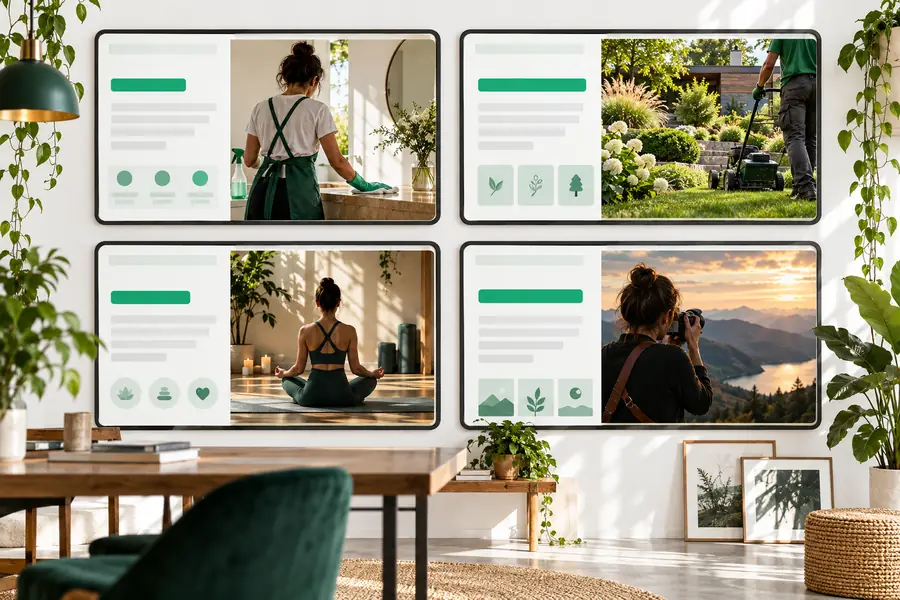
Choose your direction
The best example is not the one that looks most impressive; it is the one that makes your next content decision easier.
Limits and edges
A visual reference can reduce uncertainty, but it cannot replace the business choices that make a website credible.
A polished layout does not reveal which service is most profitable, urgent, or distinctive for your audience.
WorkaroundName one primary service and one clear next action before adapting the structure.
A sample page may suggest where testimonials, reviews, credentials, or project details belong, but it cannot verify them.
WorkaroundAdd only evidence you can stand behind, with specific outcomes or recognizable details.
Generic headings often look acceptable in an example while failing to answer the questions real visitors ask.
WorkaroundCollect phrases from enquiries, consultations, and customer feedback, then use them in your copy.
A familiar page pattern may improve clarity, but results depend on relevance, trust, speed, and the offer itself.
WorkaroundReview the finished page with one real customer task in mind and revise the weakest step.
A practical workflow
Use examples as decisions to make, not pages to copy. This three-part process keeps the useful structure while leaving room for your business.
Write down who the site is for, what they need to understand first, and what action should happen next.
Select only the sections that support that journey, such as services, proof, process, service area, or contact details.
Add your own offer, customer language, images, and evidence, then read the page as someone deciding whether to contact you.
See the difference
The before-and-after contrast is less about decoration and more about making the offer, audience, and next step easier to understand.
Use the layout as a guide, not a script.

A useful comparison
Compare the purpose behind each choice before judging the surface design. A good starting point makes the next content task more obvious.
Generic reference
Business-ready direction
Generic reference
Describes the business broadly
Business-ready direction
States the main customer outcome clearly
Generic reference
Includes sections because they are familiar
Business-ready direction
Uses sections that support one visitor journey
Generic reference
Lists offerings with little context
Business-ready direction
Explains who each service helps and why
Generic reference
Leaves trust signals implied
Business-ready direction
Shows relevant evidence near the decision point
Generic reference
Offers several competing next steps
Business-ready direction
Makes one next action easy to notice
Generic reference
Follows a style without a clear reason
Business-ready direction
Supports the audience, offer, and tone
Generic reference
Requires guessing what belongs where
Business-ready direction
Gives you a clearer list of content to replace
Ideas by business need
Different businesses need different starting points. Use the related routes below to move from general inspiration toward a more specific content task.
You need a credible first site but are still deciding which pages matter most.
A focused builder workflow can help organize the offer before you refine the details.
durable ai website builderYour website needs to sit alongside the practical software used to run the business.
Start by separating customer-facing pages from the tools that support daily operations.
durable ai website builder and small business softwareYou want examples that extend beyond core service pages into helpful educational content.
A blog-focused route can help turn recurring customer questions into useful topics.
ai blog generatorThe layout is acceptable, but the name, voice, and visual direction feel inconsistent.
A brand-focused starting point can give the website a more coherent foundation.
ai brand builderThe site should support a professional client journey from enquiry through payment administration.
An invoice-focused route can help you think about the operational step after the initial contact.
invoice builderUse the patterns here to make better decisions about your pages, message, and next step. Start with the example that feels closest to your audience, then adapt the details that only your business can provide.
Start buildingQuestions about examples
They are reference points for how a business website might organize its message, services, proof, and next action. Their value is in showing possible structures that you can adapt to your own audience and offer.
Choose the example that most closely matches your customer journey rather than the one with the most visual detail. Look for a clear primary message, relevant sections, believable proof, and an obvious next step.
A reference can help you understand structure and content priorities, but copying it exactly can leave the site generic or mismatched to your business. Replace the wording, evidence, imagery, and calls to action with details that are true for you.
Start with the audience, primary service, and desired next action. Then update the headline, service descriptions, proof, contact details, and images so every major section supports that same customer journey.